
Quality of place is a key component of a thriving region. The places where people live, work, gather, and spend time play an important role in attracting and retaining talent, supporting business growth and creating a community where people want to build their future.
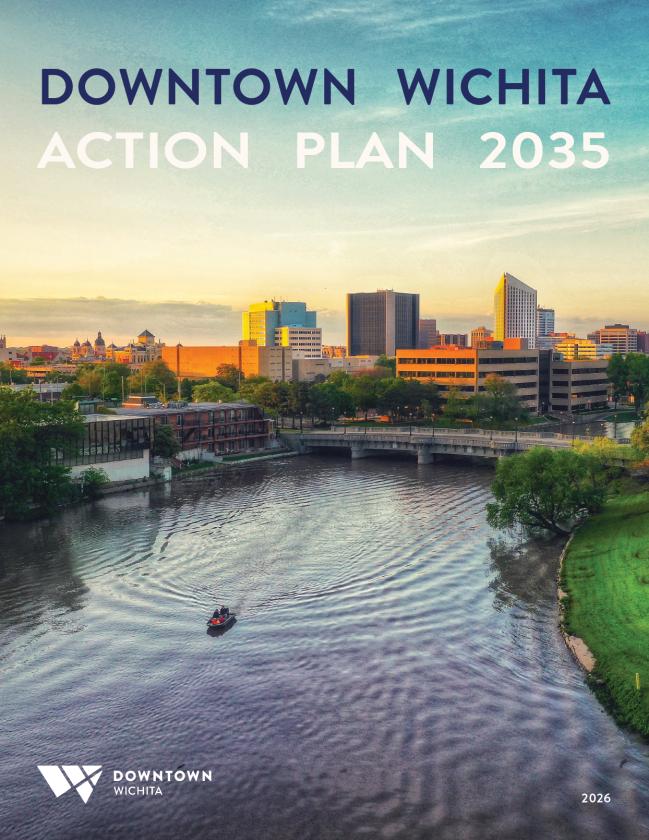
The release of the Downtown Wichita Action Plan represents an important step forward for the future of Wichita’s urban core.
Led by Downtown Wichita in partnership with design and planning firm Sasaki, the Action Plan provides a vision for how the community would like downtown to look and feel in 2035, along with a 10-year roadmap for getting there. The plan was shaped by input from more than 1,000 Wichitans through more than 50 stakeholder events.
The Action Plan builds on the momentum of Project Downtown, the city’s master plan adopted in 2010, and looks ahead to the next chapter of downtown’s growth. Its vision centers on creating a connected, mixed-use urban core that embraces the Arkansas River, celebrates Wichita’s culture and heritage, and prioritizes high-quality design.

From Vision to Action
The Action Plan is more than a vision for downtown. It outlines 17 strategies and more than 100 actions designed to help turn that vision into reality.
The strategies are organized around four goals:
- Connected Downtown: Create a welcoming downtown where people can easily access shopping, dining, entertainment and cultural destinations by foot, bike, car or transit.
- Riverfront Downtown: Embrace the Arkansas River as a central gathering place for recreation, entertainment and enjoying nature.
- Well-Designed Downtown: Create high-quality buildings, streets and public spaces that contribute to a safe, attractive and welcoming environment.
- Full-Service Downtown: Continue developing a dense, mixed-use urban center with more opportunities to live, work, shop and experience entertainment.
Among the plan’s recommendations are working with the development community to establish more than 5,000 new apartments and townhomes with a range of affordability and homeownership options, establishing a downtown circulator bus that runs every 10 minutes, transforming Douglas Avenue into a signature street and creating more opportunities for dining, outdoor recreation and commerce along the Arkansas River.
Quality of Place in Action
The Partnership’s Quality of Place strategic priority recognizes that a strong economy depends on more than jobs and investment. A community’s quality of place helps create an environment where businesses can attract talent, residents can put down roots and visitors want to return.
Our downtown plays an important role in that equation. As the center of Wichita, it is a place where people experience the city’s culture, businesses, restaurants, entertainment, public spaces and riverfront. Continued investment in downtown helps strengthen the broader region’s quality of place.
The Action Plan also demonstrates how planning and implementation can work together. While the plan provides a 10-year roadmap, several priorities are already taking shape.
The Downtown Wichita Clean Team launched to help create a cleaner and more welcoming downtown environment. Plans for a new 30,000-square-foot downtown grocery store will also expand services for downtown residents and move Wichita closer to the goal of a more complete, full-service urban core.
These efforts build on more than a decade of success through Project Downtown. From 2010 to 2025, downtown saw more than $2 billion in investment, with more than $800 million in additional projects underway or in the pipeline. The transformation includes 119 completed projects, 1,935 new housing units, 1,350 new hotel rooms and 6.3 million square feet transformed.
Shaping Wichita’s Next Chapter
The Action Plan reflects a broad community conversation about what downtown can become and how it can continue contributing to Wichita’s growth.
The final draft was presented to the Historic Preservation Board, Bicycle and Pedestrian Advisory Board, Transit Advisory Board, Advance Plans Committee and all six Wichita District Advisory Boards. On July 23, the Metropolitan Area Planning Commission unanimously recommended that the city and county adopt the Action Plan into the shared city-county Comprehensive Plan.