Greater Wichita Partnership > Blog
May 15 Investor Meeting explores Wichita State University Athletics’ economic impact on the greater Wichita region
Economic impact comes in many different forms. Many don’t realize that Wichita State University (WSU) Athletics contribute nearly $60 million annually to the Wichita community.
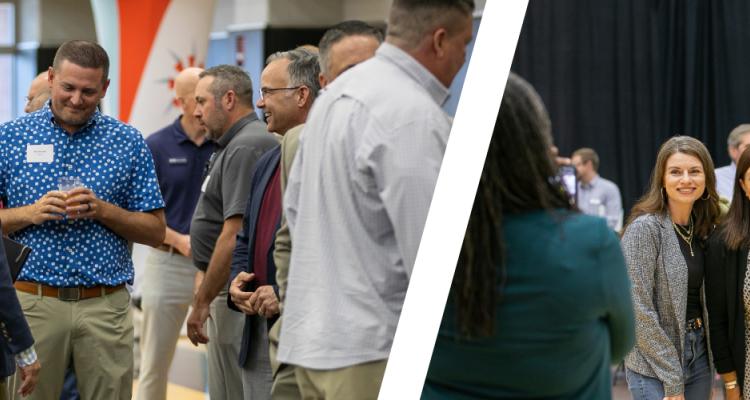
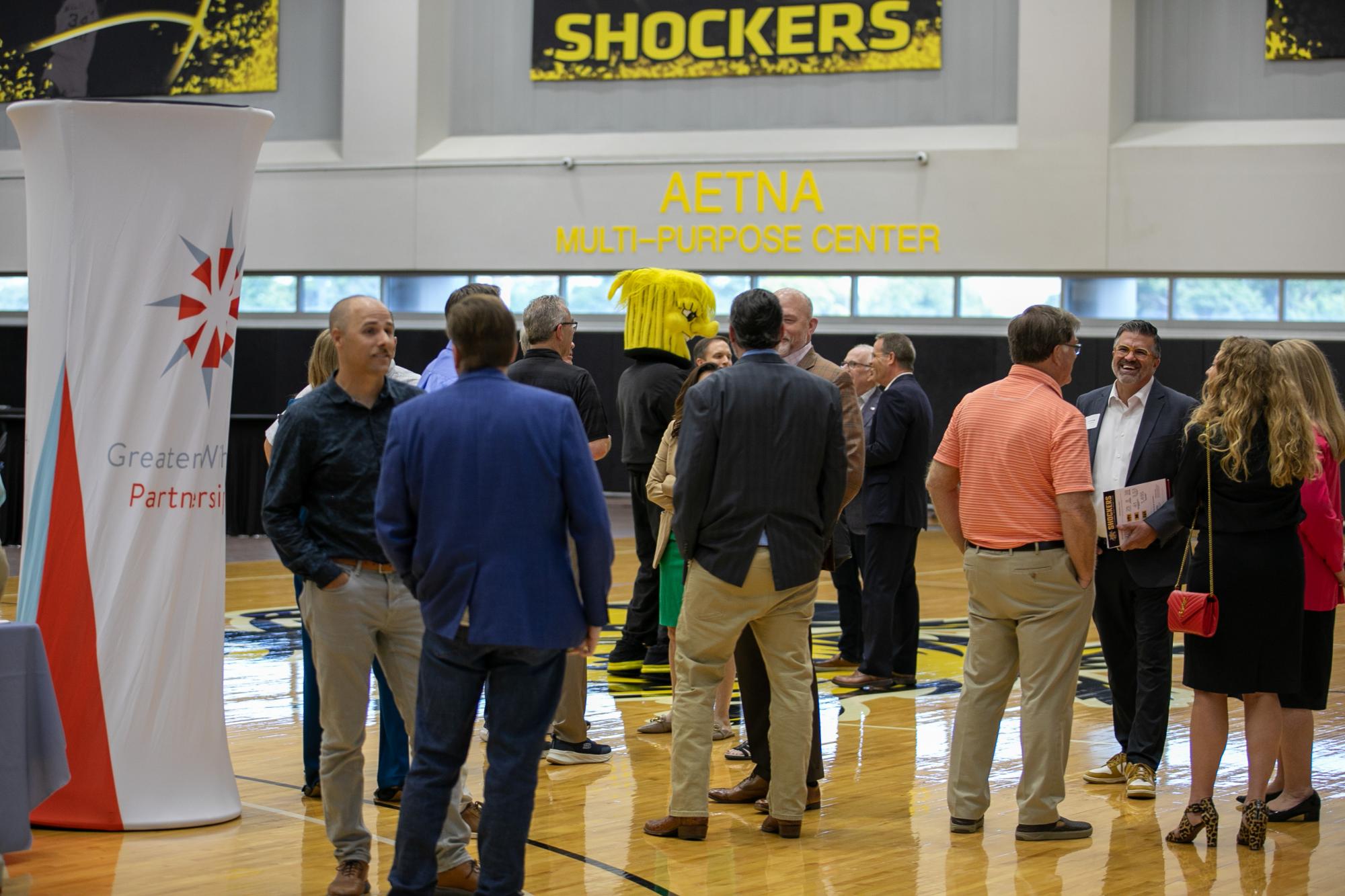
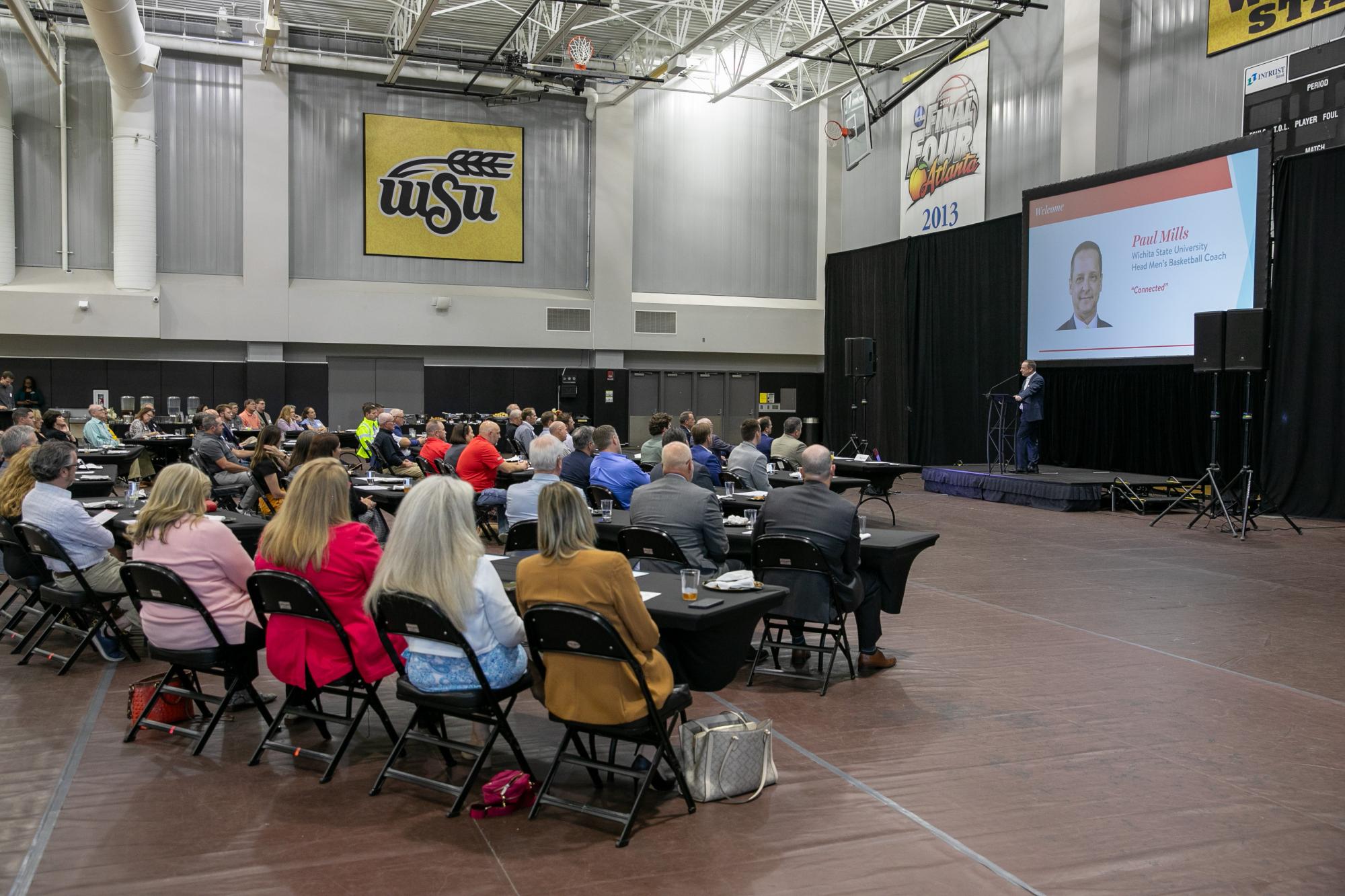
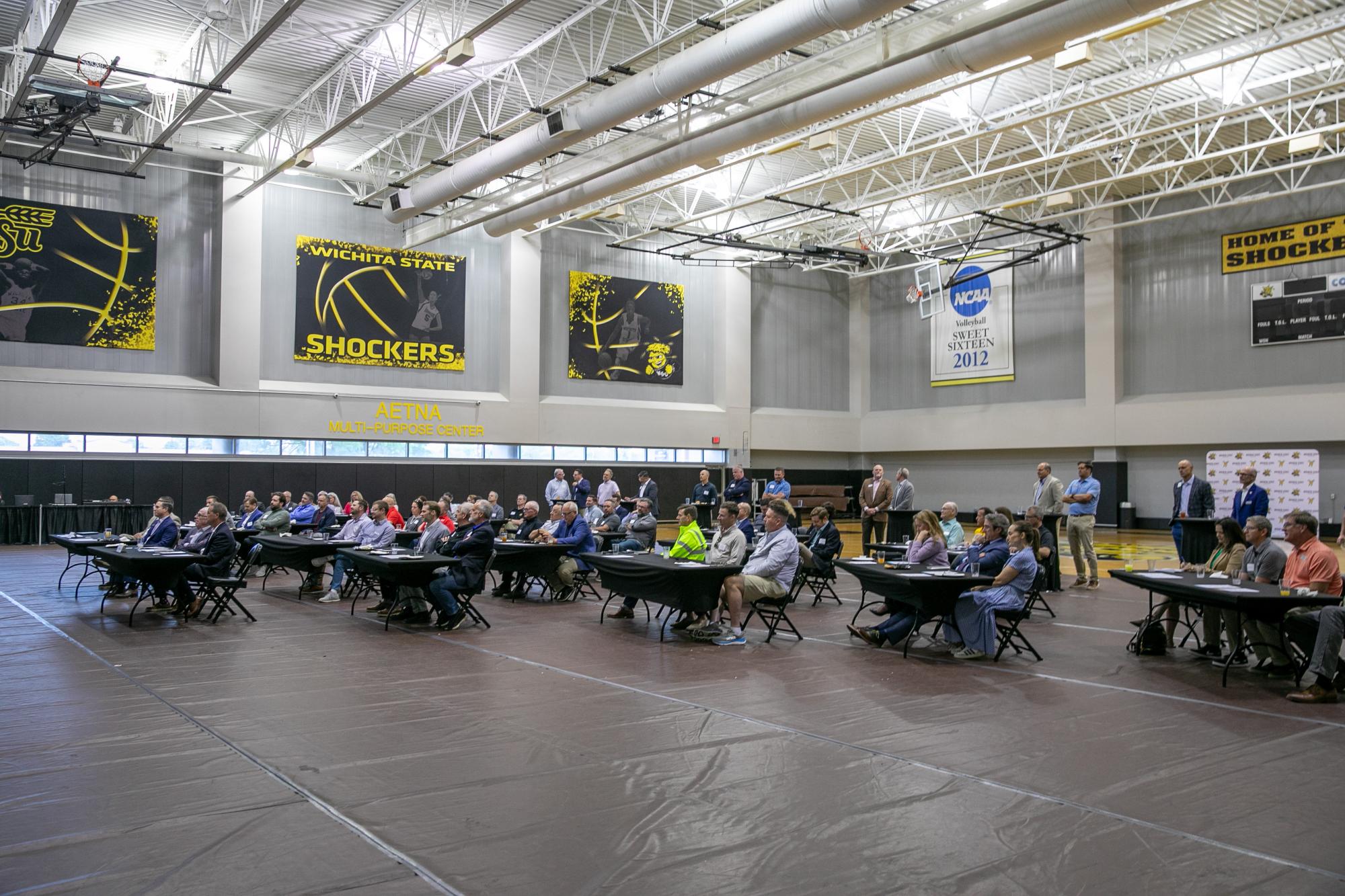
Greater Wichita Partnership investors and community leaders convened for a lunch meeting May 15, 2026 on campus to provide an inside look into how WSU athletics are contributing to the Wichita region’s economic momentum and national visibility. College athletics generate visitor spending, increase national visibility and engage in the community in meaningful ways that benefit local businesses and strengthen the region’s quality of life.
Introduction & Recent Activity Update
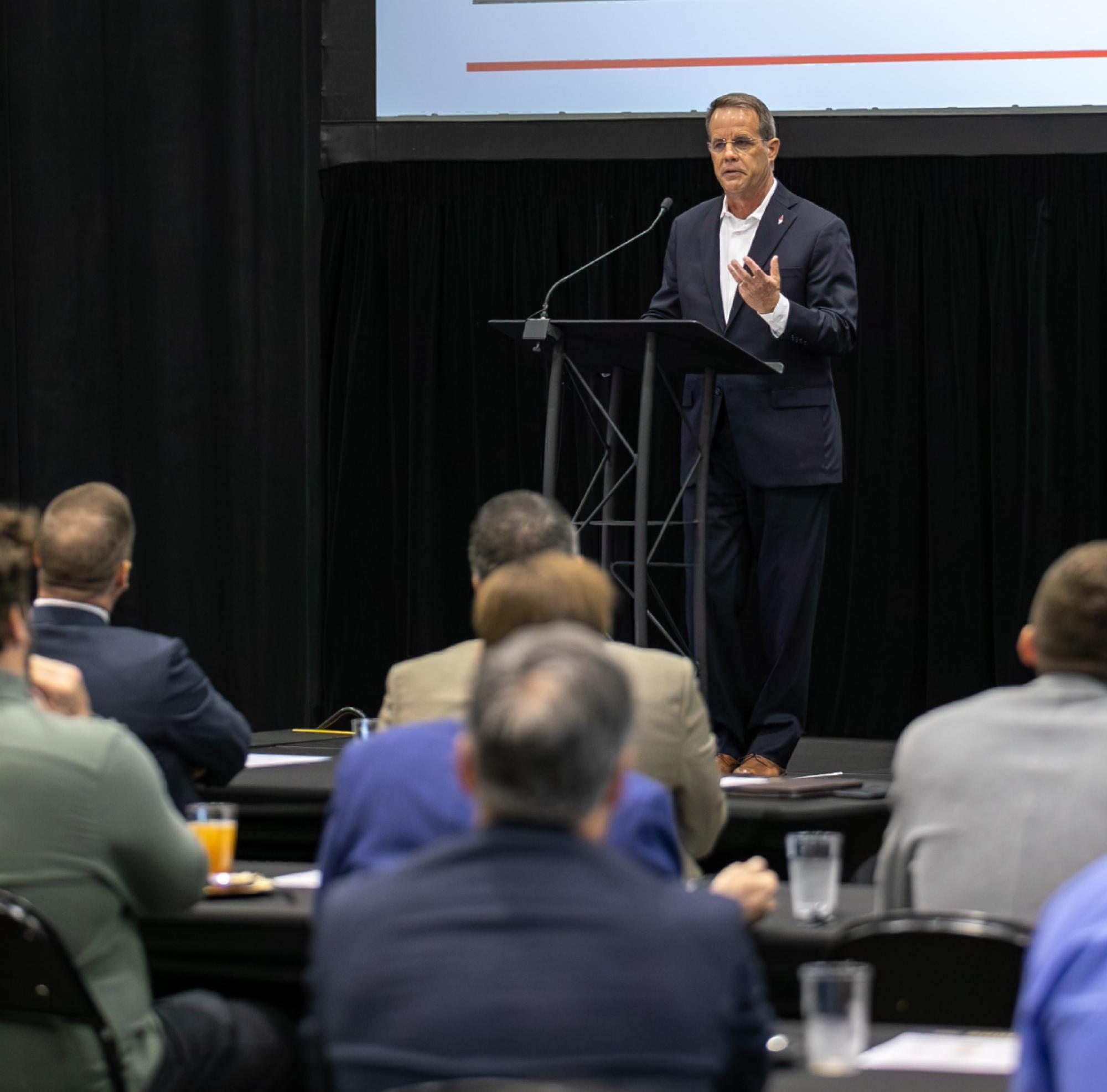
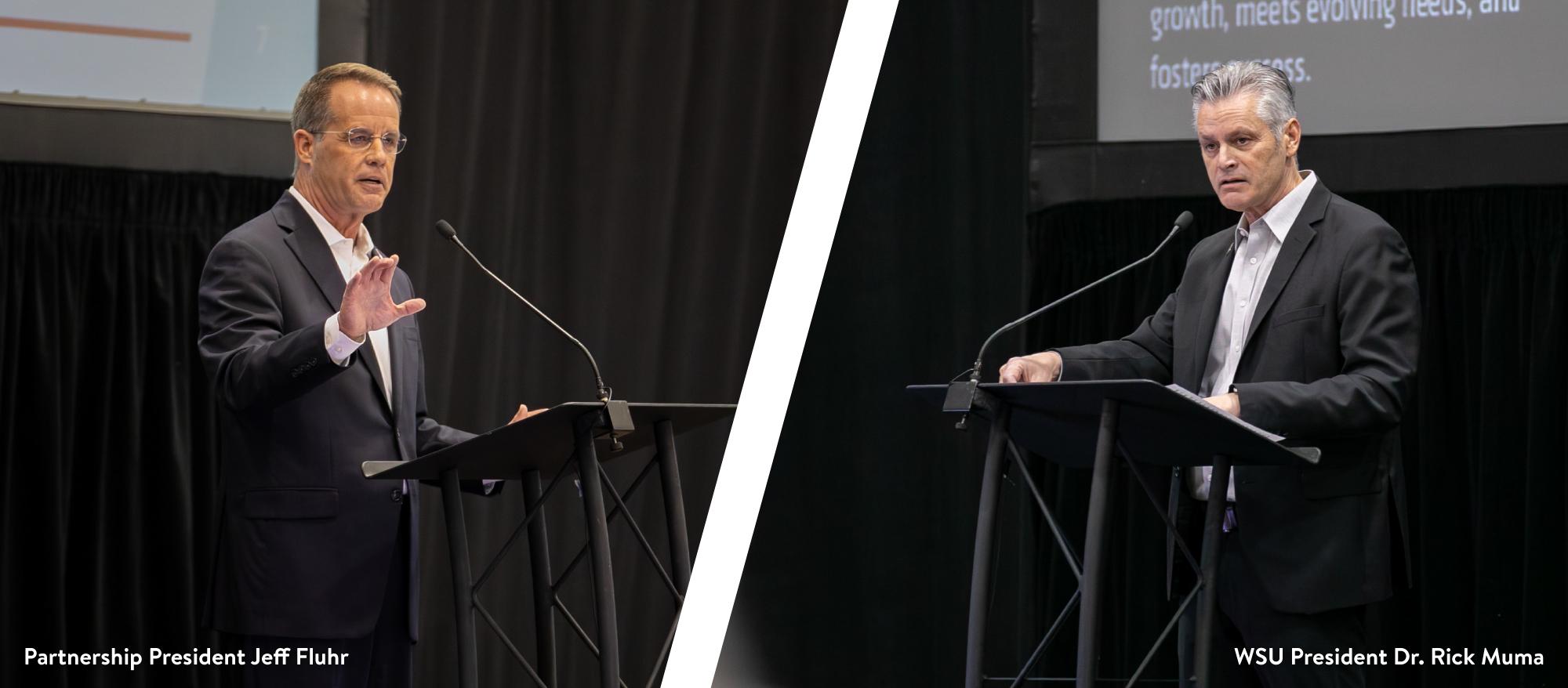
Partnership President Jeff Fluhr welcomed attendees to the second Investor Meeting of 2026 and updated investors on numerous advancements in the community’s development since the last meeting in February.
The Partnership, in collaboration with U.S. Senator Jerry Moran, has recently welcomed leaders from four of the world’s most influential space and aerospace organizations, including RTX Corporation CEO Chris Calio, NASA Administrator Jared Isaacman, The Boeing Company CEO Kelly Ortberg and Airbus in North America Chairman & CEO Robin Hayes.
“We will unveil at the Farnborough International Airshow in July the significant number of new contracts these types of visits have resulted in for our supply chain companies, specifically since 2021,” Fluhr said.
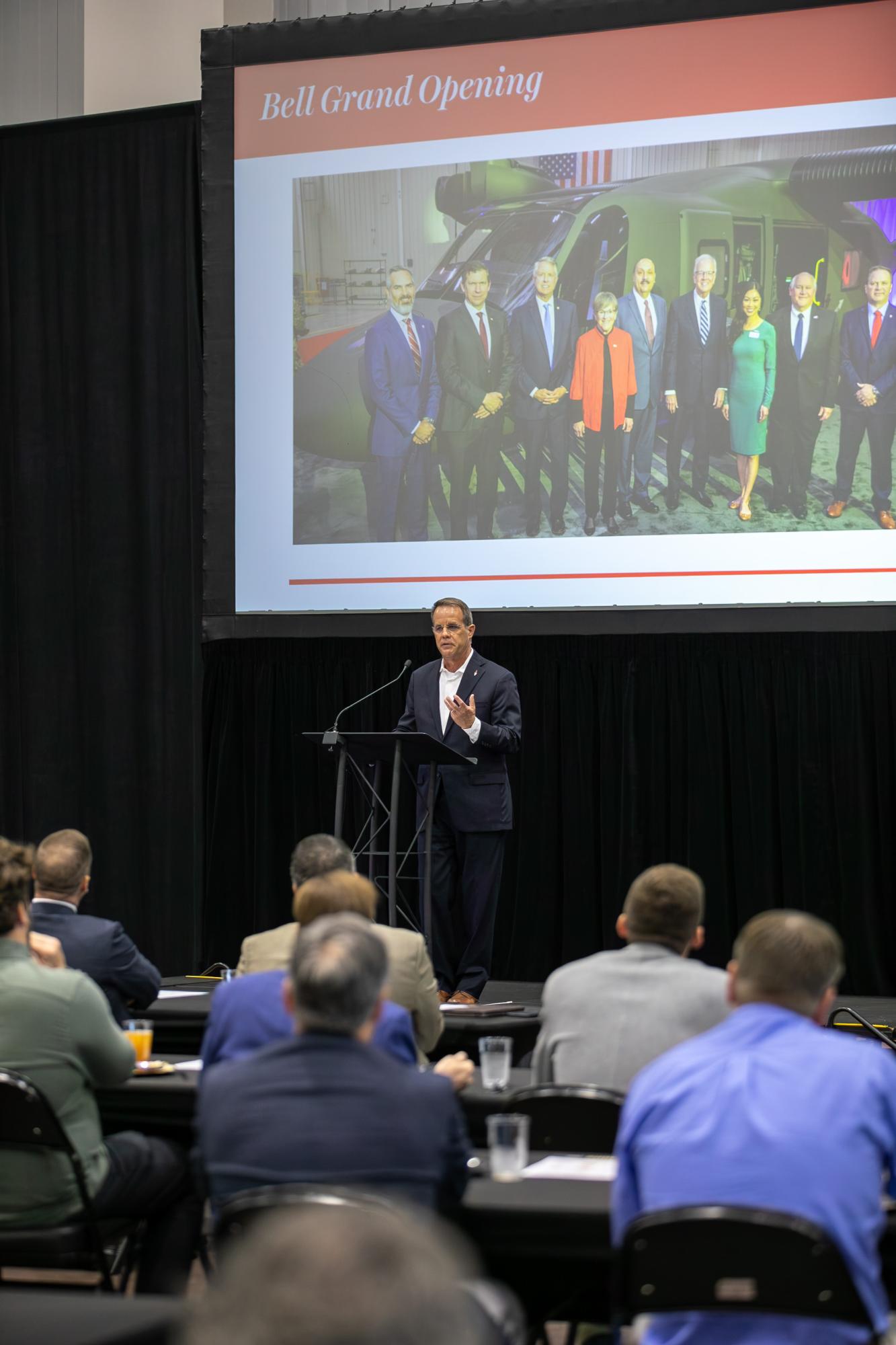
Among the other community wins he mentioned were the grand opening of Bell’s assembly facility in Wichita, Exploration Place’s Adventure Playscape – a vision launched at the Partnership’s 2023 Annual Meeting – officially opening to the public in March and a recent Talent Talk Early Literacy & Workforce, Industry & Education roundtable and planning for the upcoming Choose Wichita Summit.
“All that I’ve been talking about that has materialized in our community would not be happening without your investment,” Fluhr said before thanking each investor level shown on slides and acknowledging new investors plus those who have increased their financial investment in the Partnership this year. Those investments and the results were offered in the Leveraging Your Investment document distributed to investors.
Building Global Impact With a Shocker Game Plan
Fluhr reminded the audience, “You have often heard us note that we are competing across the Midwest, North America and the globe. Your leadership and your investment are key to us having success in each of these markets. We are competing against aggressive markets, and we are seeing great progress in our community. We cannot let up, though. We must continue to lean in through both the private and public sectors.”
The university, for example, drives about $1.3 billion in annual economic impact and supports more than 5,000 jobs statewide. The National Science Foundation’s Higher Education Research and Development Survey rankings recently named WSU:
- No. 1 in aerospace research and development (R&D) from all funding sources.
- No. 2 in engineering R&D funded by industry and defense.
“These rankings put WSU in the company of institutions such as the Georgia Institute of Technology, Johns Hopkins University and MIT,” Fluhr said. “All of this is a clear demonstration of how Wichita State is driving innovation, talent and economic growth for our region. The university is a critical driver in economic development, which in turn exponentially increases our global competitiveness.”
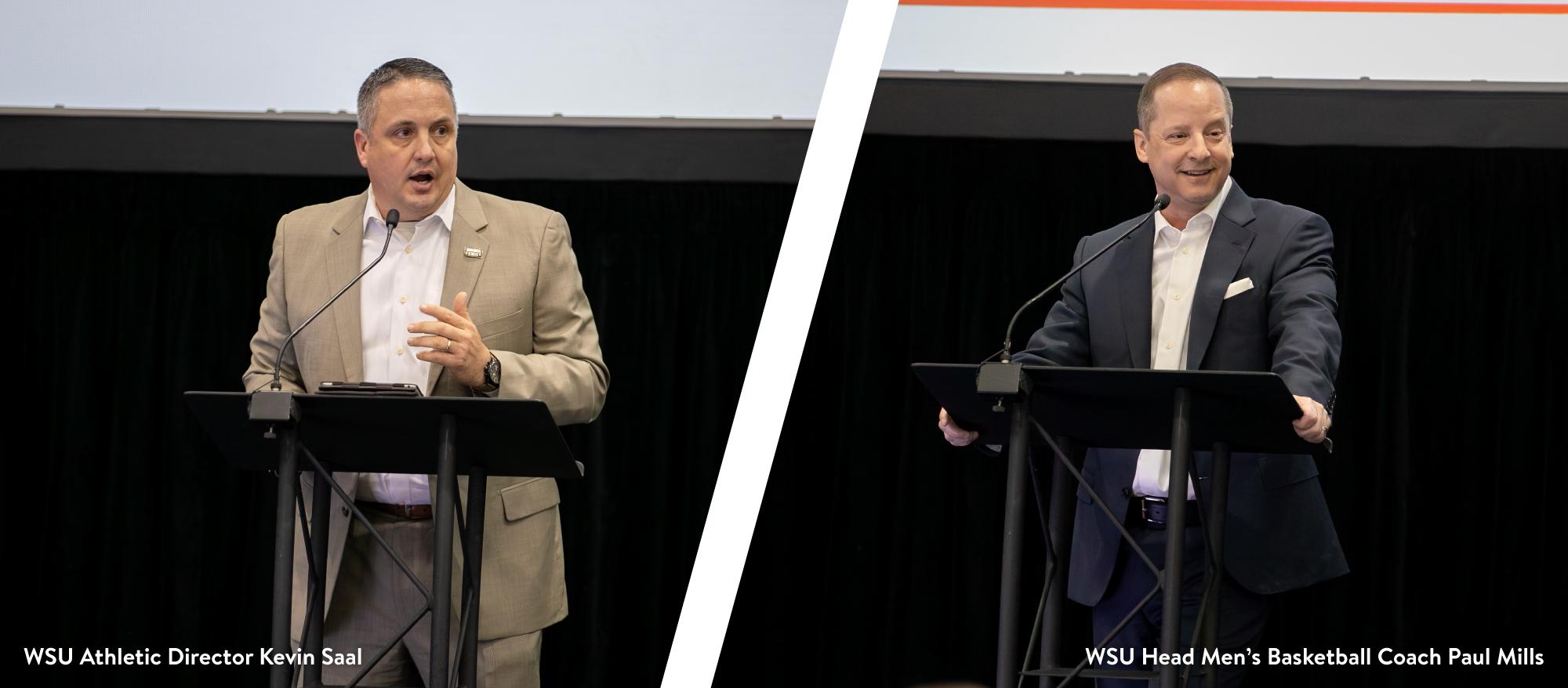
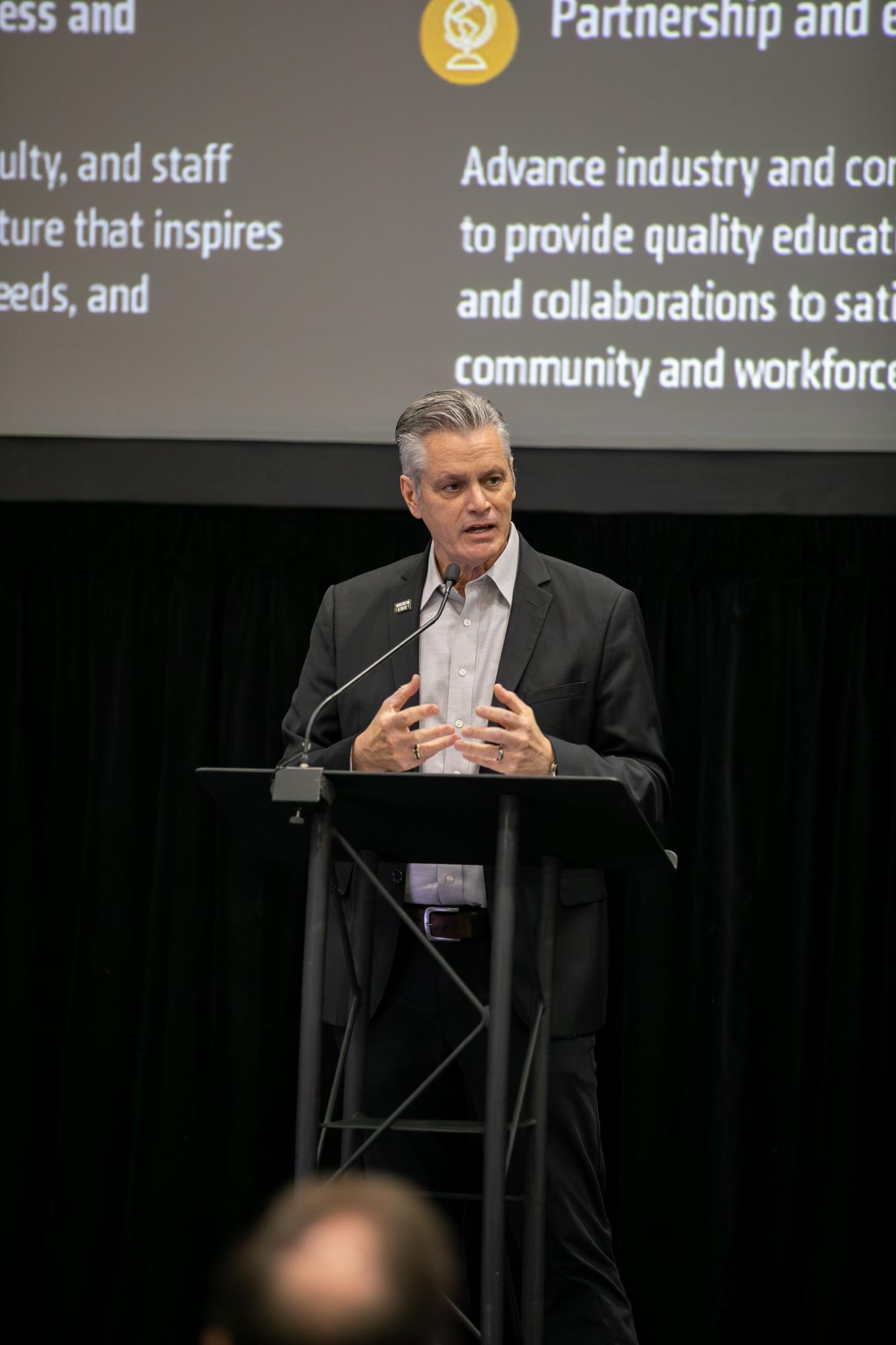
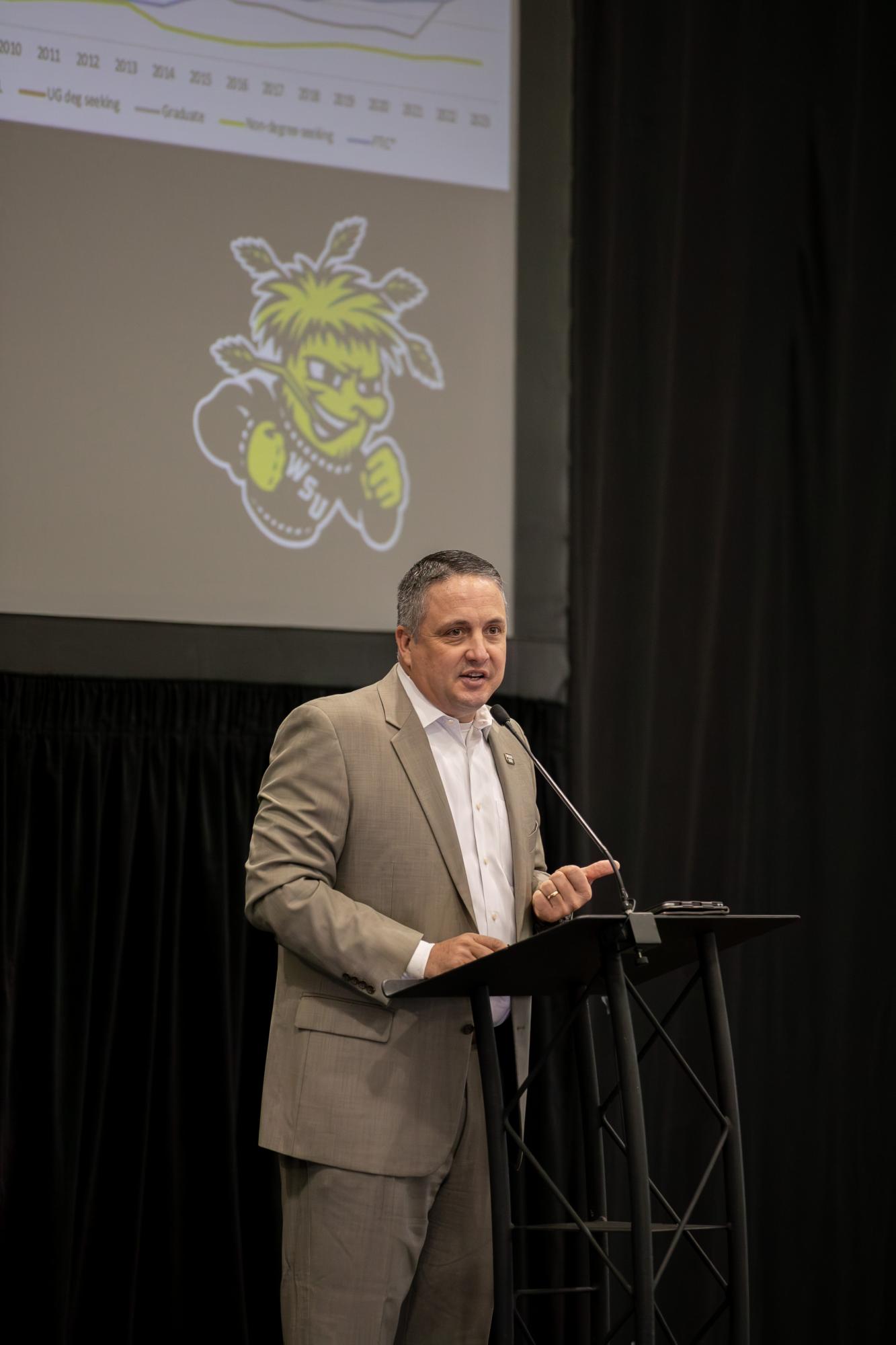
WSU President Dr. Rick Muma took a few moments to describe how central athletics is to the university’s main priorities of helping families through access to education, providing talent to Kansas businesses and increasing economic prosperity with higher education that benefits the Kansas economy. Athletic Director Kevin Saal then gave an inside look at the athletics department, which encompasses a little more than 270 student athletes from 30 states and 24 countries.
Key takeaways:
- The 2013 men’s basketball Final Four run contributed over a half a billion dollars in earned media value for Wichita and Wichita State University.
- Between FY2021-2025, Shocker Athletics invested about $46.3 million in capital improvement projects. After indirect and induced spending, this contributed nearly $80 million to the economy.
- WSU Athletics contributes $59.9 million annually to the economy, which includes $19.7 million in tourist visitor spending.
- In 2024, there were about 655,500 visits to Charles Koch Arena with 26% of the visits from people living at least 50 miles from Wichita.
- A Tripp Umbach study reported that in FY25 WSU Athletics generated $202 million in total economic impact across Kansas ($44.9 million in direct spending and $157.1 million in indirect and induced economic activity).
- Regarding student athletes’ ability to profit from their name, image and likeness (NIL), Saal said the men’s basketball roster resources have increased year over year since 2022 including a significant growth for the coming season. This allows the university to resource the men’s basketball program better than league peers with football teams.
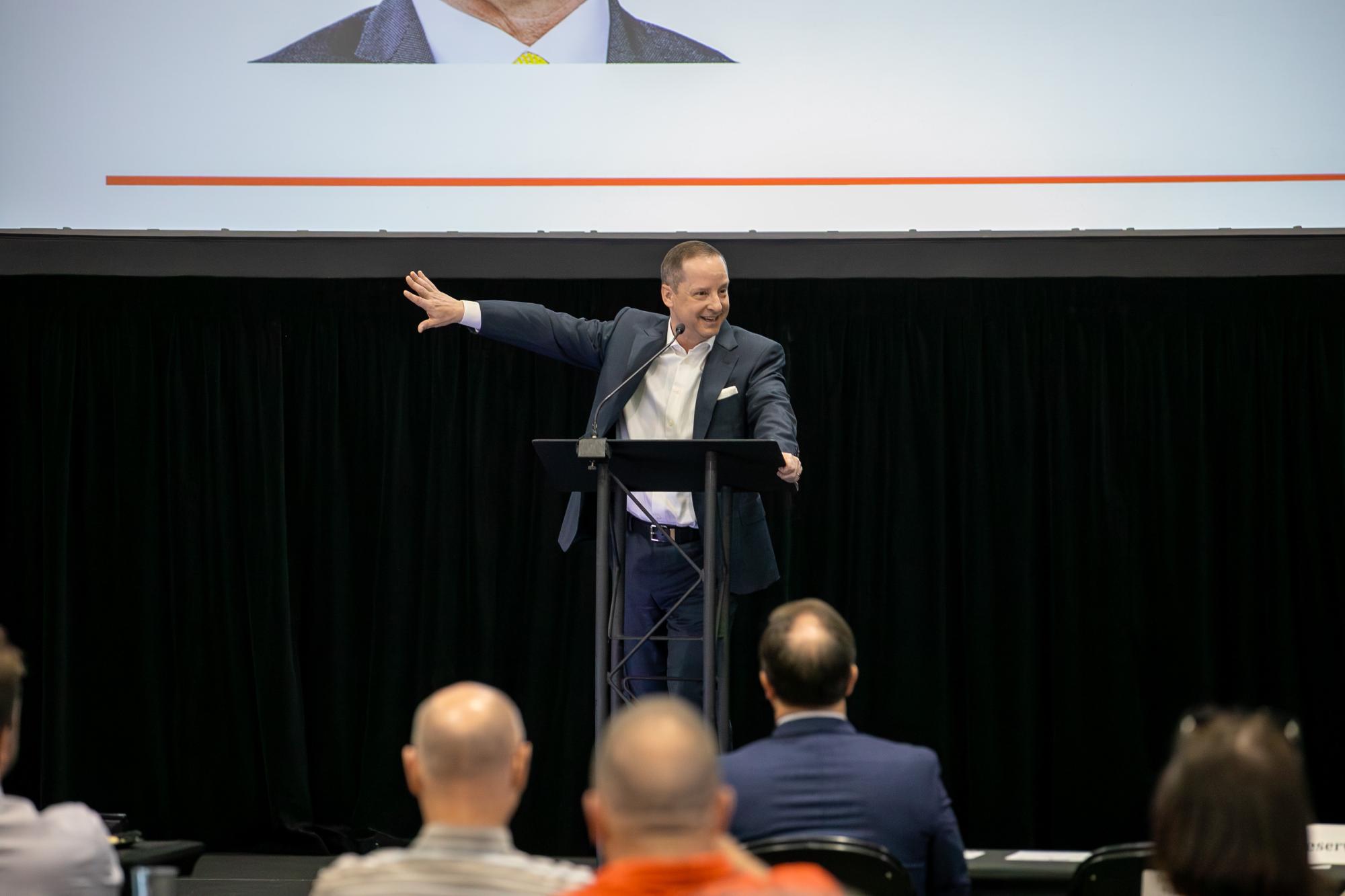
Head Men’s Basketball Coach Paul Mills was the final guest speaker and focused on the climate of his roster, goals for the upcoming season (the team is favored to win the conference) and the importance of building relationships in the NIL environment.
With estimates that 20 to 25 college basketball teams will have $20 million rosters for the 2026-27 season, Mills talked about the difficulty of operating in the current NIL environment that allows for no salary cap and unlimited player movement.
“The truth is we don’t need a $20 million roster to be a Top 25 team, we need community support,” Mills said. “That’s why a Will Berg stays.”
Berg, a 7-foot-2 center from Sweden, transferred to WSU from Purdue University and announced this offseason that he’ll return for his senior season rather than enter the transfer portal where higher NIL offers awaited. Mills shared what Berg said about his decision:
“The grass is greenest where you water it. I feel like here in Wichita, not only do we have an amazing coaching staff, we have great players returning and we have a great community. Wichita State is the place where I want to be. I feel like what we’re building here, this is something I want to be a part of.”
Mills said this shows the bond between athletes and community can’t be overstated.
“There is a special relationship between the Shockers and the city of Wichita,” Mills said. “I’ve talked to a number of coaches who coached here previously and they’ve all mentioned it. When the Shockers do well, the city does well.”
Conclusion
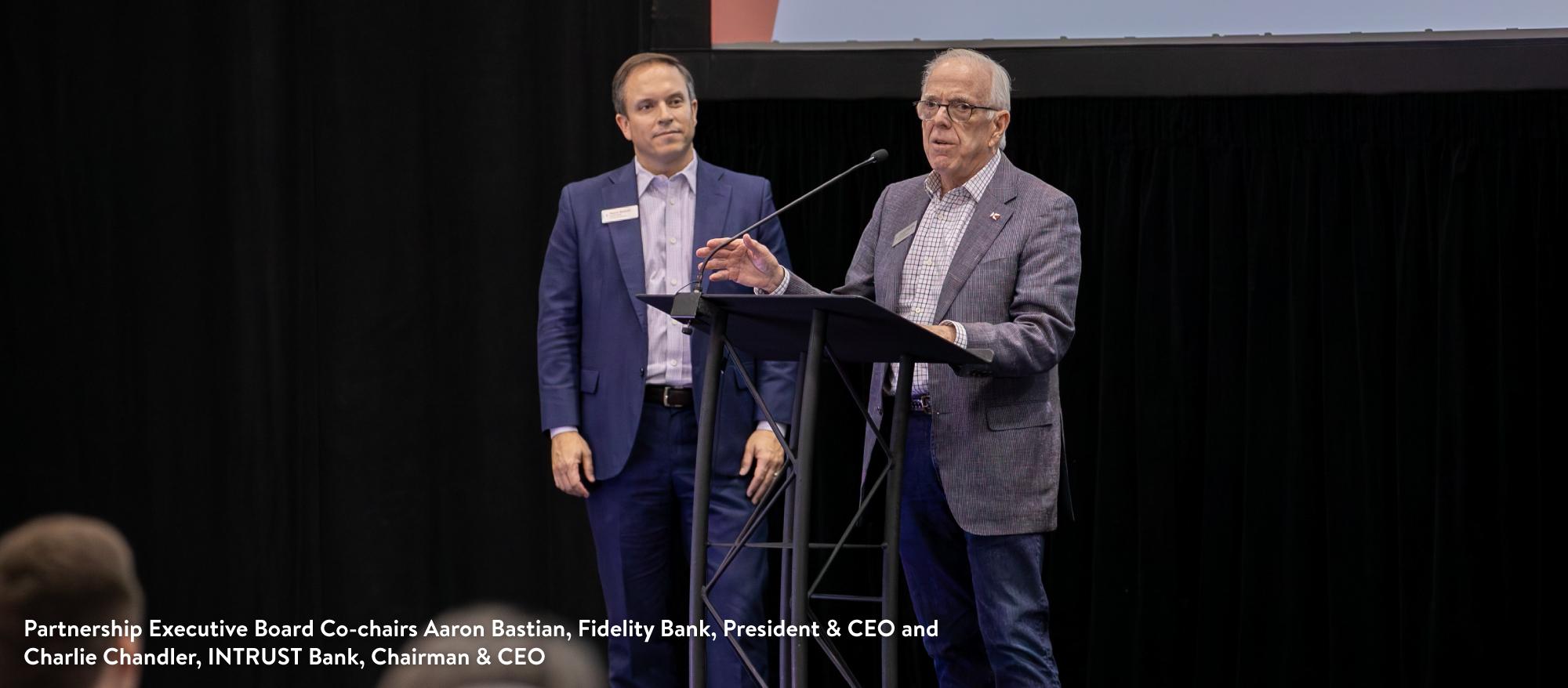
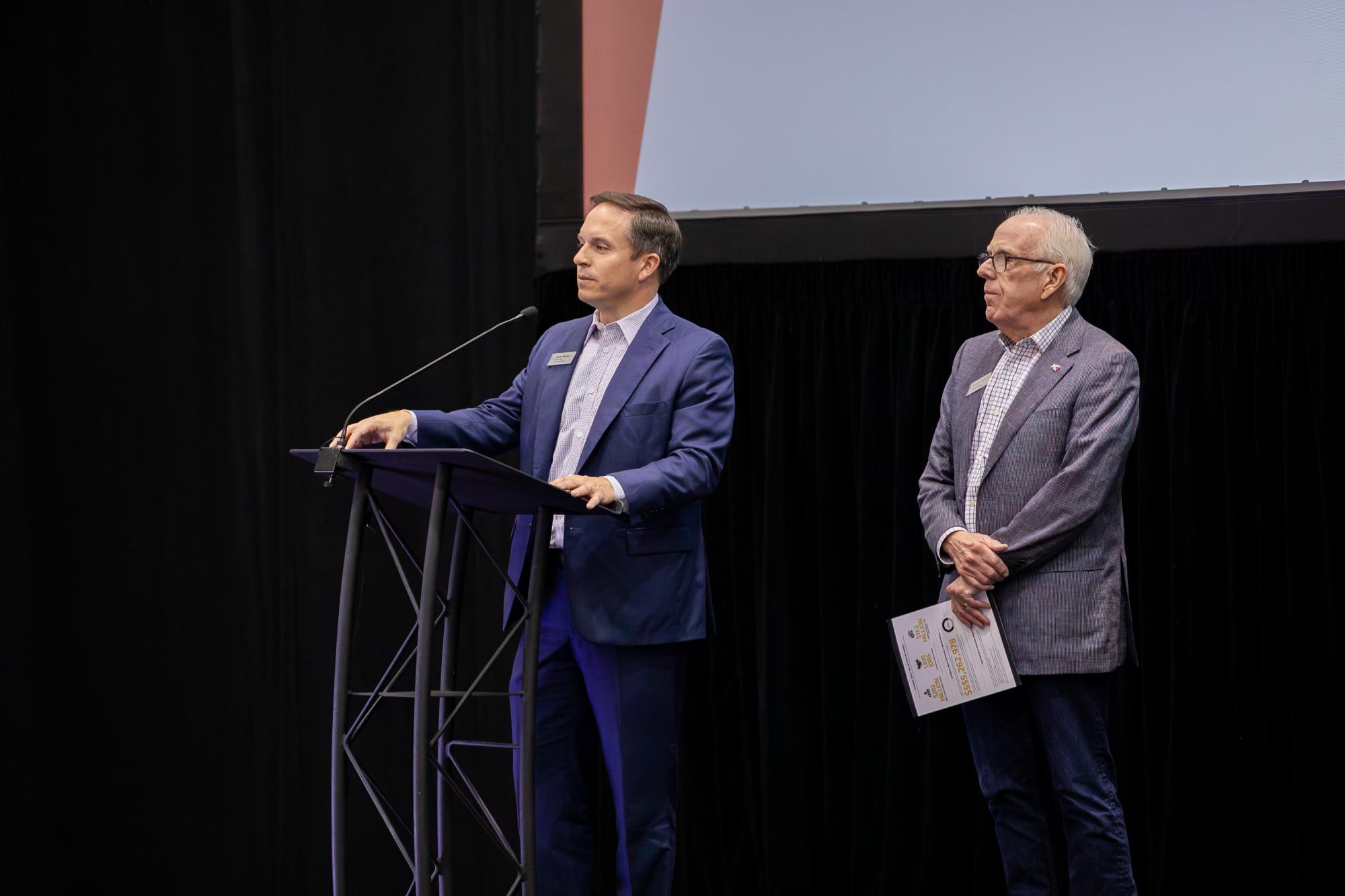
Partnership Executive Board Co-chairs Charlie Chandler, INTRUST Bank, Chairman & CEO, and Aaron Bastian, Fidelity Bank, President & CEO, thanked WSU for hosting the Investor Meeting and applauded Muma, Saal and Mills for providing briefings.
“The kind of success we’re having in Wichita and the progress that you’re seeing takes everybody,” Bastian said. “It’s business and government, education and athletics all pulling in the same direction, having that positive impact on the economy in the Wichita region.”