Talent Talk: Connecting Early Literacy to Wichita’s Future Workforce
By Emily Barnwell

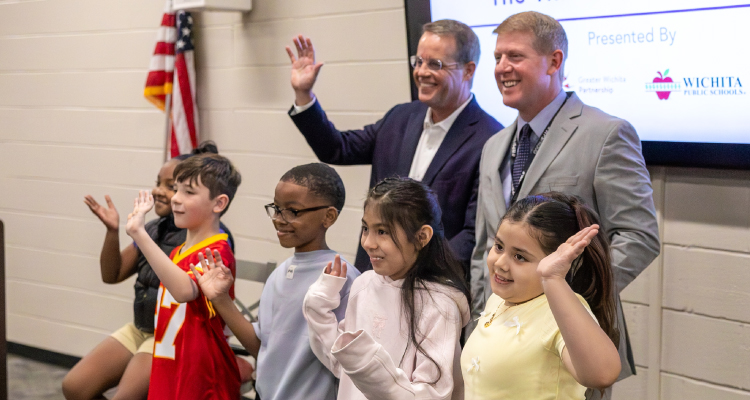
A child learning to read today is part of Wichita’s workforce tomorrow.
That idea was at the center of the Partnership’s first Talent Talk of 2026, held on March 25. The event brought together leaders from business, education, and the nonprofit sector to explore one of the most important predictors of long-term academic and career success: third-grade reading proficiency.
Fittingly, Wichita Public Schools (WPS) students themselves played a role in the event. They helped welcome attendees, assist with registration, and introduce speakers and panelists throughout the program. Their participation served as a reminder that today’s students are the future workforce and that the conversations taking place today will shape their opportunities ahead.
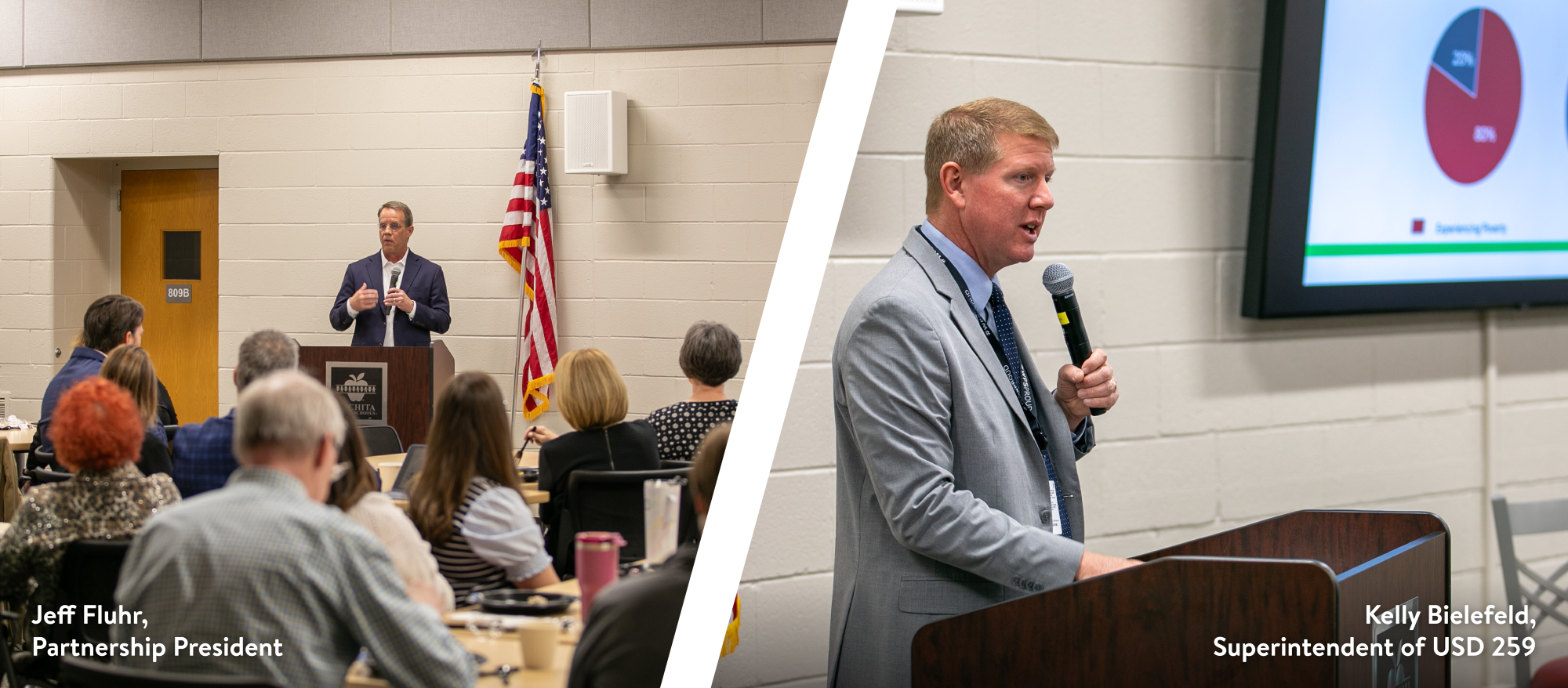
Partnership President Jeff Fluhr opened the event by highlighting the importance of talent development to Wichita’s economic future. He noted that Wichita’s diverse industries, from aerospace and advanced manufacturing to cybersecurity and biomedicine, depend on a strong and prepared workforce.
“Our workforce is critical to our region’s continued success,” Fluhr said. “Third-grade literacy is a pivotal point in education, and it is an area where the business community has both an opportunity and a responsibility to engage.”
Keynote speaker Kelly Bielefeld, Superintendent of USD 259, helped frame the issue by drawing a clear connection between early literacy and workforce outcomes.
He shared that research consistently shows that students who are not reading proficiently by the end of third grade face greater academic challenges later in school. Those challenges can compound over time, affecting graduation rates, postsecondary opportunities and ultimately workforce readiness.
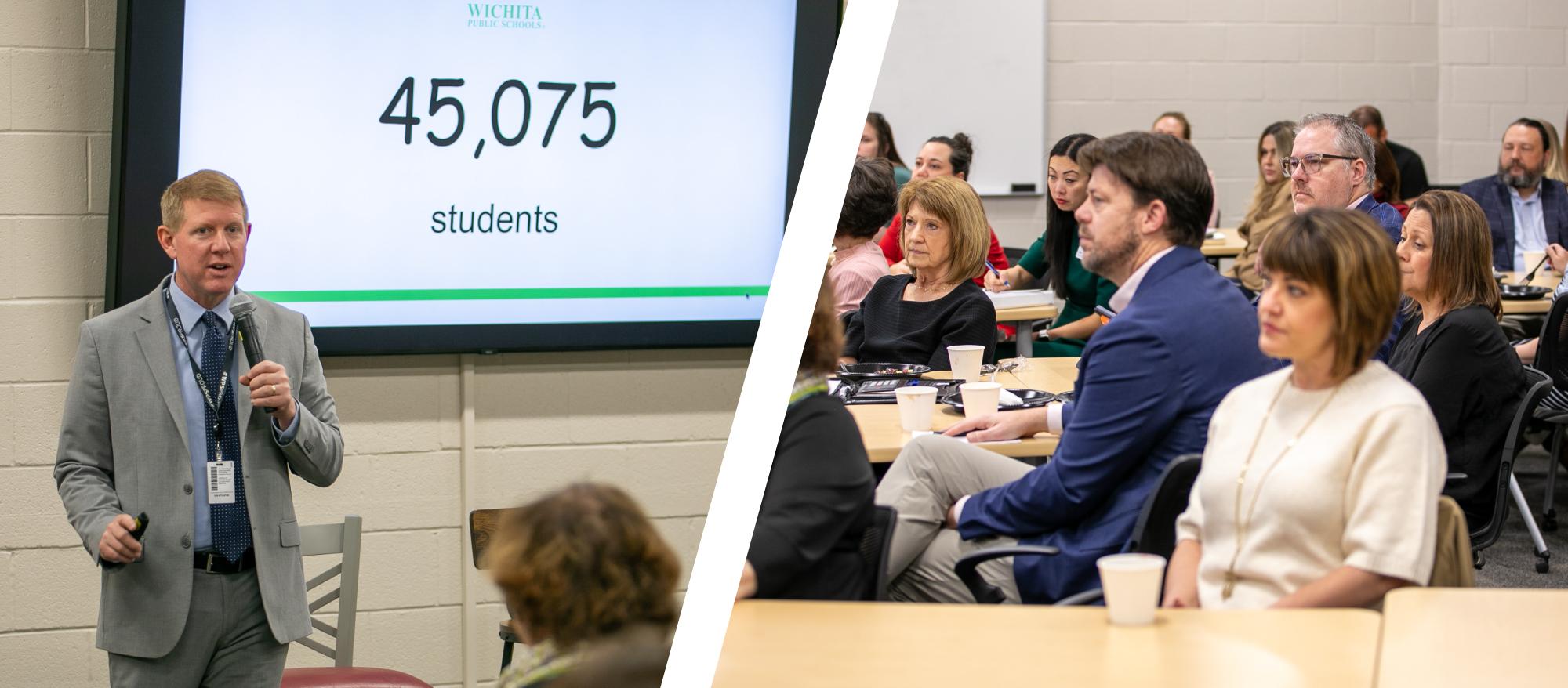
WPS serves approximately 45,000 students, roughly the population of a city the size of Salina, Kansas.
“If every student showed up every day with a good night’s sleep and a full breakfast, we would still have thousands of students with learning differences like dyslexia who need specialized reading support,” Bielefeld said.
Approximately four out of five students in WPS qualify for reduced-price lunches, representing about 80 percent of the district’s population. Bielefeld said poverty remains one of the strongest predictors of whether a student will read on grade level.
He said students from low-income households are more likely to enter kindergarten already behind in reading readiness. In many cases, this can stem from limited access to books, fewer early learning opportunities, or reduced exposure to vocabulary and experiences that help build comprehension skills.
Language barriers also play a role. While about 18% of Wichita residents speak a language other than English at home, that number rises to approximately 36% within WPS, where more than 100 languages are spoken across the district.
These factors can create significant challenges for early literacy development, but Bielefeld emphasized that progress is being made.
WPS has implemented evidence-based reading instruction, strengthened early intervention strategies, and trained teachers in the science of reading through statewide LETRS professional development.
This summer, the district will pilot an innovative literacy program with partners including Wichita State University and the State of Kansas to provide targeted reading support for students who need additional intervention. The program will remove barriers to participation by offering transportation, meals and engaging afternoon activities alongside morning literacy instruction.
Despite these efforts, Bielefeld stressed that schools cannot solve the issue alone.
“Our kids are worth it,” Bielefeld said. “Each year, Wichita Public Schools graduates about 3,000 students, the largest source of new workforce in our community. They’re going to be our nurses, our doctors and our leaders. It’s worth all of us working together to make sure they’re ready.”
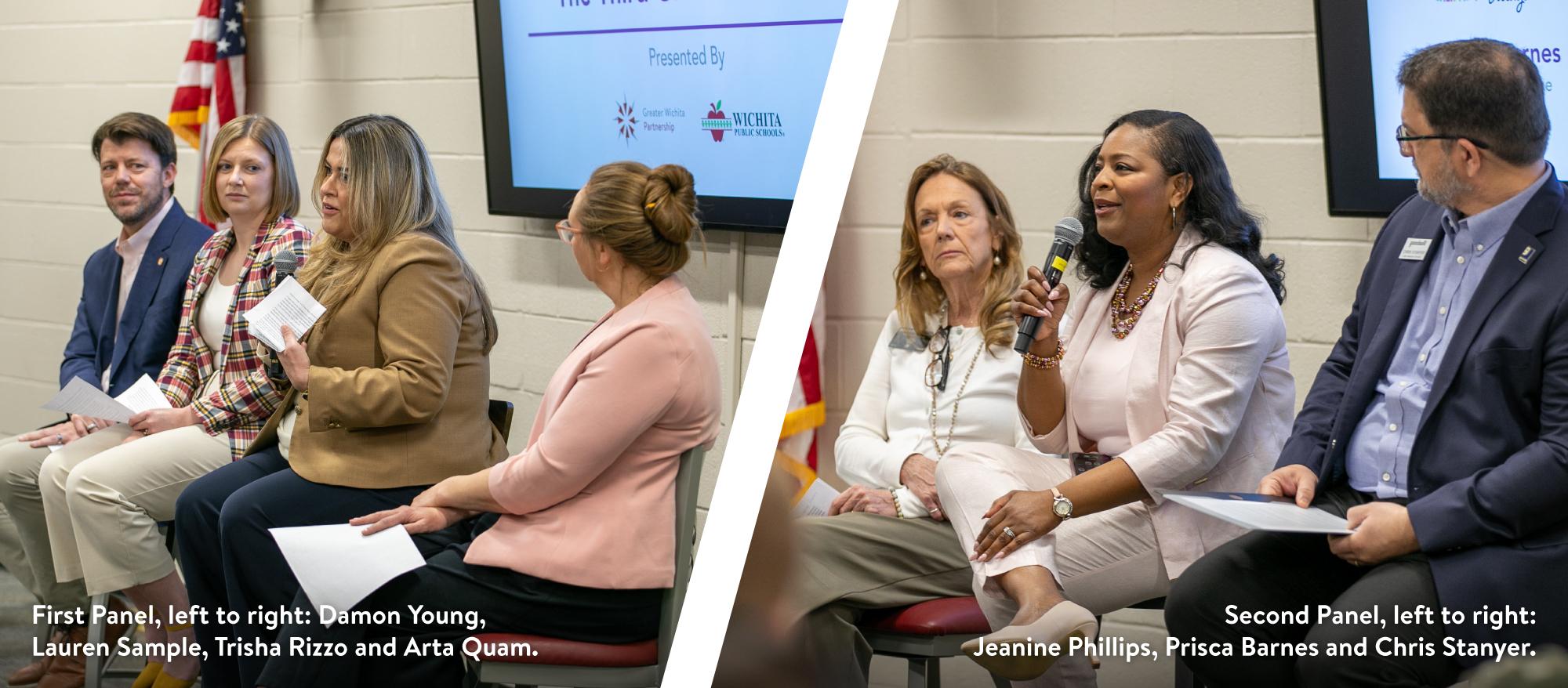
Moderated by the Partnership’s Tami Bradley, the first of two panel discussions featured Arta Quam, Instructional Coach for USD 259; Lauren Sample, Community Engagement Manager at Fidelity Bank; Trisha Rizzo, Human Resources Business Partner at IMA; and Damon Young, CEO of LEAD Wichita.
Panelists discussed why literacy is not only an education issue but also an economic one.
Businesses can support literacy initiatives in a variety of ways, from employee volunteer programs and mentorship to book donations and support for classroom libraries. Even small investments of time can have a meaningful impact on students who benefit from additional one-on-one reading practice.
Many local companies are already stepping up.
Employees at IMA Financial Group volunteer as reading buddies in Wichita schools and participate in the Read to Succeed program, while Fidelity Bank partners with elementary schools across multiple cities to support literacy programs and after-school learning opportunities.
Panelists emphasized that building relationships with students today helps strengthen the workforce of tomorrow.
The conversation then broadened to examine literacy from the perspective of organizations working directly with children and families.
Moderated by the Partnership’s Ricki Ellison, the second panel featured Prisca Barnes, Founder and CEO of Storytime Village; Jeanine Phillips, Co-Founder and Executive Director of the Fundamental Learning Center; and Chris Stanyer, Chief Mission Officer of Goodwill Industries of Kansas.
Panelists highlighted how literacy challenges often extend beyond the classroom.
At Goodwill Industries of Kansas, adult education programs regularly serve individuals who read at or below a sixth-grade level, illustrating how literacy gaps can persist into adulthood without early intervention.
Community organizations such as Storytime Village work with children and families from birth through early elementary school to build early reading habits, increase access to books and strengthen family engagement in literacy.
Meanwhile, the Phillips Fundamental Learning Center focuses on specialized instruction for students with dyslexia, emphasizing phonics-based teaching methods to help struggling readers build foundational skills.
Panelists agreed that improving literacy outcomes requires a whole-community approach that supports both students and families.
“These are all of our children,” Barnes said. “Literacy is not just an education issue. It’s a community responsibility.”
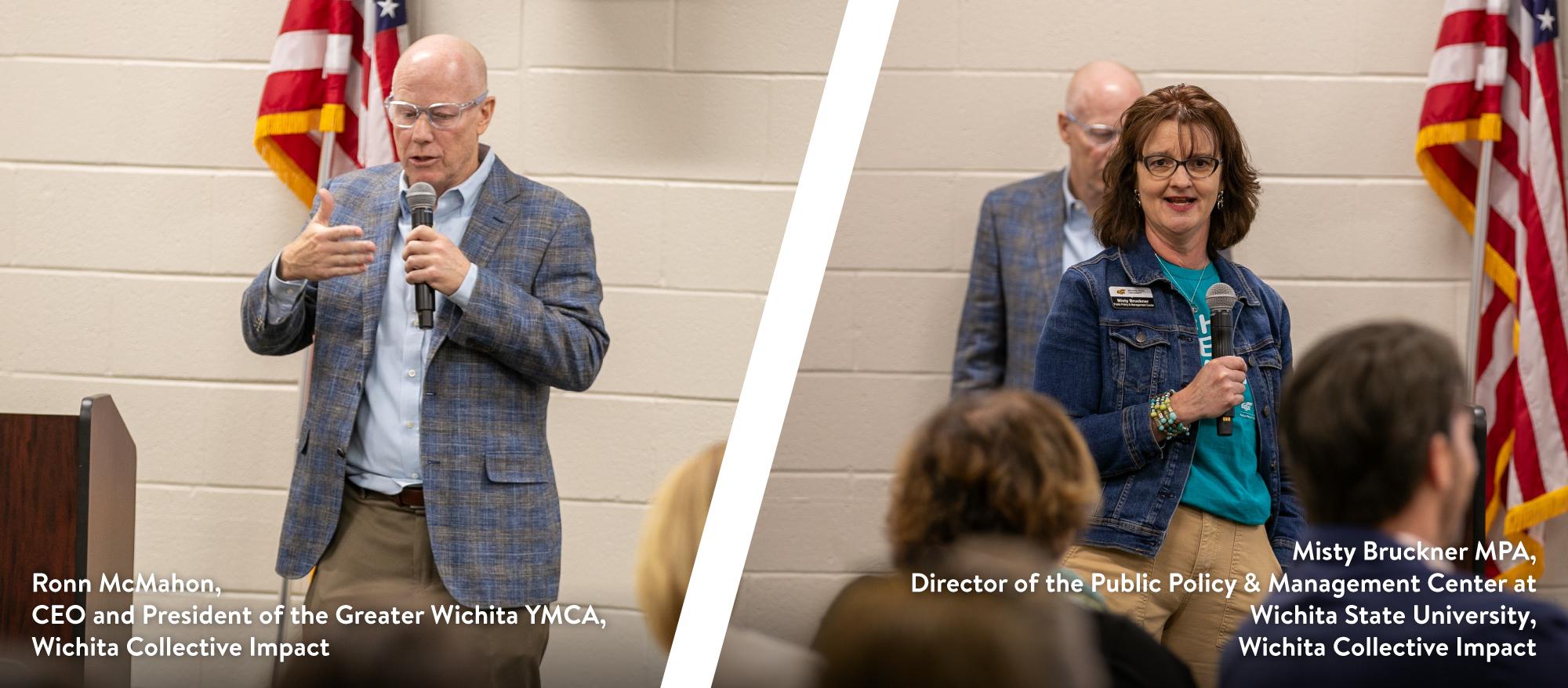
The event also highlighted the work of Wichita Collective Impact, a coalition of organizations working together to improve kindergarten readiness and third-grade reading outcomes across the region.
Misty Bruckner MPA, Director of the Public Policy & Management Center at Wichita State University, and Ronn McMahon, CEO and President of the Greater Wichita YMCA, shared how the initiative brings together schools, nonprofits and community partners to align strategies, share data and coordinate resources.
Through collaborative programs and family literacy initiatives, the coalition has already seen promising results. Over the past three years, nearly 90 percent of participating students maintained or improved their literacy scores, while caregivers reported increased confidence around reading at home.
Talent Talks, now in their second year, are designed to strengthen the feedback loop between industry and education by exploring opportunities and challenges affecting the region’s long-term economic competitiveness.
The Partnership’s Talent Team will continue to convene these conversations and identify ways the business community can engage in efforts to support Wichita’s future talent pipeline.
Investors or community members interested in learning more about Talent initiatives or opportunities to get involved are encouraged to contact Tami Bradley at tami@greaterwichitapartnership.org or Ricki Ellison at ricki@greaterwichitapartnership.org.